Clearance CLR-3291 · AIR220
AIRLAT
Air CargoClearance sheet
LATAM Cargo moves warehouse staff training into virtual reality
LATAM Cargo is training warehouse staff in virtual reality. The carrier named no rollout date, vendor or cost — an adoption claim without performance data attached.
Read-back
- LATAM Cargo has adopted virtual reality for warehouse staff training.
- The carrier disclosed no rollout date, vendor or number of headsets in the announcement.
- No baseline or post-training performance figures were published.
- LATAM Cargo operates one of the largest freighter networks in the Americas.
- The announcement is an adoption statement; measurable training economics remain unverified.
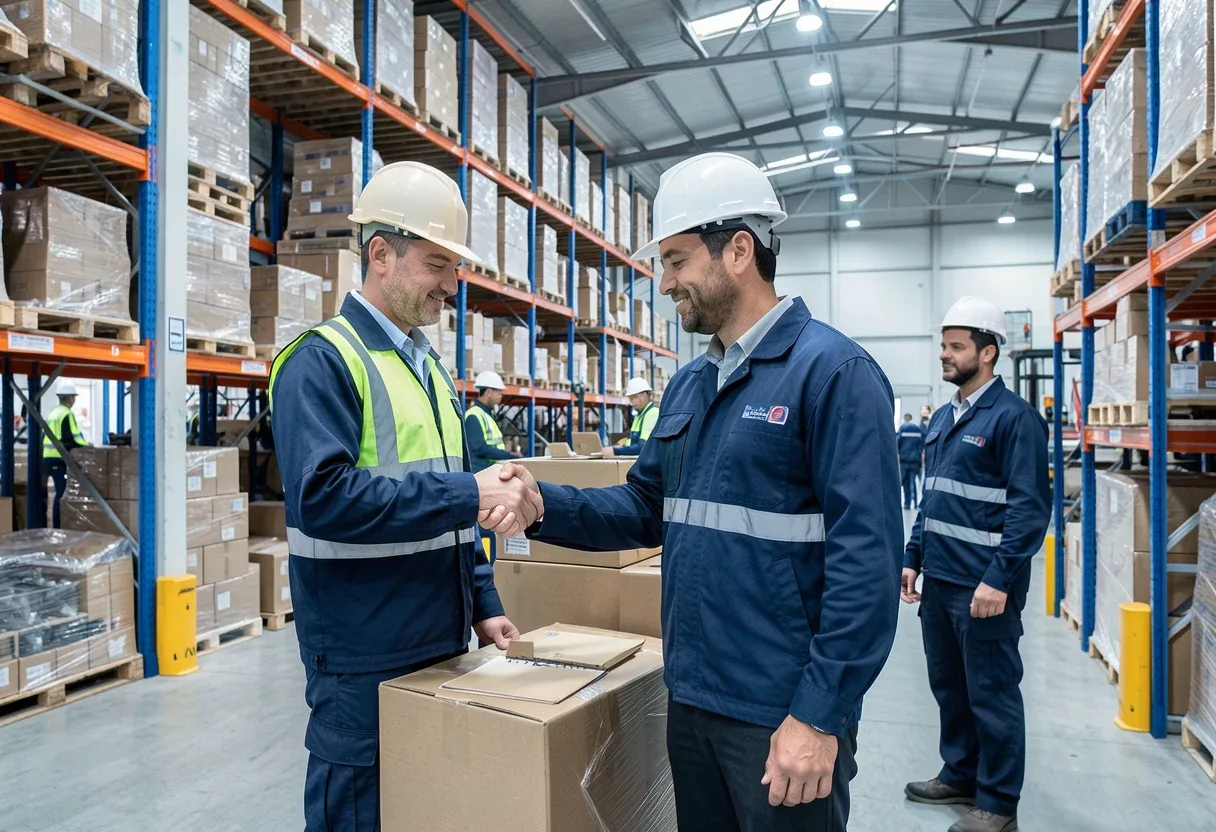
LATAM Cargo has adopted virtual reality to train warehouse staff, the carrier confirmed in an announcement reported by Air Cargo News. The airline group becomes the latest cargo operator to move ground-handling instruction off the warehouse floor and into simulated environments.
The company disclosed no rollout date, no number of headsets deployed and no training sites named in the initial announcement. Those omissions matter. VR training programs in air cargo have a mixed record, and adoption by a major Latin American group does not by itself prove measurable operational gains.
What does this change for LATAM Cargo's operation?
In principle, VR instruction lets a carrier train ramp and warehouse crews on cargo build-up, unit load device handling and dangerous-goods procedures without pulling freighters, ULDs or live freight out of service. Trainees repeat failure scenarios — a misloaded pallet, a damaged container, a hazmat segregation error — at zero cost to the physical operation.
Whether LATAM Cargo captures those gains depends on facts the announcement does not provide: how many staff pass through the VR curriculum, how course completion time compares with classroom instruction, and whether error rates on the warehouse floor actually fall after training. No baseline figures were published.
A pattern across the sector
LATAM Cargo is not an isolated case. Airlines, ground handlers and logistics firms have tested headset-based instruction for several years, targeting the tasks where physical training is expensive or risky. The cited announcement follows that pattern rather than breaking new ground technically.
The skeptical question is retention. VR programs live or die on whether simulated proficiency transfers to the warehouse. Carriers that publish before-and-after error data remain rare; most publish adoption statements instead. LATAM Cargo's announcement, as reported, sits in the second category — a deployment claim without performance data attached.
Why it matters commercially
LATAM Cargo operates one of the largest freighter networks in the Americas, and warehouse throughput sits directly on the critical path of that network. Any tool that shortens time-to-competence for new hires, or reduces damage and misloading, carries a direct cost consequence. The carrier has not yet quantified that consequence in euros, dollars or man-hours.
The company also said nothing about the technology vendor supplying the headsets and software, or about certification of the training content against IATA or regulator-approved dangerous-goods curricula. Until those details surface, the move reads as a pilot-scale modernization rather than a verified change to training economics.
The next data point to watch is disclosure: if LATAM Cargo publishes trainee volumes, cycle-time reductions or damage-rate improvements, the program becomes measurable. Until then, the announcement tells us a carrier bought headsets — and tells us nothing about what they replaced.
via Google News: Air cargo (Source)
More from James Calloway
Show full bio
Staff writer covering people, launches and day-to-day practice in Commercial aviation industry coverage at Flightdeck Report.
487 articles
Same bay
- FDR996LATAM Cargo reports 150% surge in Europe–Brazil pharma volumes · October 15, 2026
- FDR637CargoTech extends air cargo platform with AI, compliance tools · October 10, 2026
- FDR960Cathay Cargo deploys AI-assisted screening for export permit checks · September 28, 2026
- FDR368Air Canada Cargo doubles down on digital groundwork with Lödige · September 30, 2026
- FDR542China Airlines turns to AI and Mixed Reality for maintenance training · October 10, 2026