Clearance CLR-8343 · AIR996
AIRLAT
Air CargoClearance sheet
LATAM Cargo reports 150% surge in Europe–Brazil pharma volumes
LATAM Cargo's pharmaceutical shipments between Europe and Brazil have surged 150%, making temperature-sensitive cargo a priority segment on the South Atlantic corridor.
Read-back
- LATAM Cargo reports a 150% surge in pharmaceutical shipments between Europe and Brazil.
- The growth concerns temperature-sensitive cargo requiring unbroken cold chains.
- The Europe–Brazil corridor links major pharmaceutical production in Europe with South America's largest healthcare market.
- The reported figure does not specify tonnage or comparison period, so the base volume is unclear.
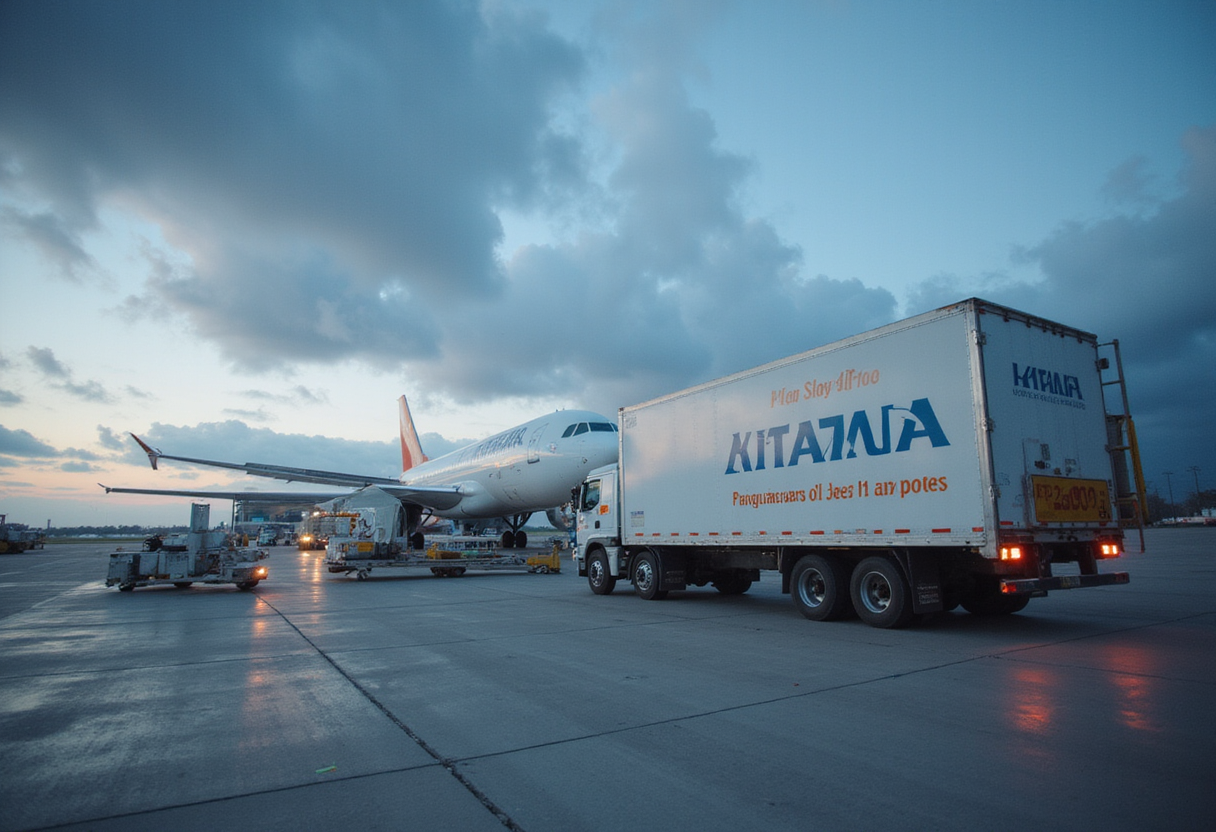
LATAM Cargo has recorded a 150% increase in pharmaceutical shipments between Europe and Brazil, a figure that places temperature-sensitive cargo among the fastest-growing segments on the South Atlantic trade lane.
The number matters because pharmaceutical freight is not simply more volume. It is structurally different volume. Vaccines, biologics and other temperature-sensitive medicines require unbroken cold chains (a temperature-controlled logistics sequence from shipper to consignee), and they earn premium yields for carriers able to guarantee product integrity.
What does this change for LATAM Cargo?
A 150% surge means the carrier is now carrying two and a half times the pharmaceutical tonnage it previously moved between Europe and Brazil. For a cargo operator, that shift has three practical consequences:
- Yield mix. Pharma rates sit above general cargo rates because shippers pay for certified handling, not just capacity.
- Network weighting. Europe–Brazil capacity — belly hold space on passenger aircraft plus dedicated freighter rotations — must be allocated with pharma transit times in mind.
- Handling investment. Growth at this pace only sticks if ground handling at both ends meets pharmaceutical-grade standards, including validated cool-room storage and active container (battery-powered temperature-controlled unit) management.
The mechanism behind the growth
The Europe–Brazil corridor is a natural pharma lane. Europe hosts a large share of global pharmaceutical production and export, while Brazil anchors demand across South America as the region's largest healthcare market. Air freight is the default mode for high-value medicines that cannot tolerate long ocean transits or temperature excursion.
A tripling of volumes in this segment signals that shippers are consolidating pharma flows onto carriers they trust with cold-chain integrity. Carriers earn that trust through certifications such as IATA's CEIV Pharma (Centre of Excellence for Independent Validators in Pharmaceutical Logistics), a standard that audits and validates an airline's handling processes end to end. Certification, not marketing, is what converts pharma tenders into contracts.
LATAM Cargo's reported surge suggests its handling chain on this lane is performing to the standard pharmaceutical shippers require. Sustained growth, however, will test capacity as much as competence.
The verification question
A 150% growth rate should be read against a base. A tripling from a small initial volume is easier to achieve than a tripling from an established base, and the reported figure does not specify the tonnage or the comparison period. What it does establish is direction and velocity: pharmaceutical demand on Europe–Brazil is growing materially faster than the cargo market overall.
For LATAM Cargo, the operational question is whether freighter and belly capacity can absorb further growth without eroding the handling quality that won the business in the first place. Pharmaceutical shippers move quickly when a cold chain fails — and they move just as quickly back when it does not.
What comes next
The figure positions LATAM Cargo as a serious participant in the transatlantic-to-South America pharma flow, a lane where European carriers and integrators have historically dominated temperature-sensitive traffic. If the growth trend holds, expect the carrier to keep investing in validated infrastructure and in dedicated capacity on the corridor. The 150% surge is a market signal as much as a traffic statistic: pharmaceutical logistics between Europe and Brazil is scaling, and LATAM Cargo intends to carry its share of it.
via Google News: Air cargo (Source)
More from Sophie Lindqvist
Show full bio
Senior reporter covering people, launches and day-to-day practice in Commercial aviation industry coverage at Flightdeck Report.
499 articles
Same bay
- FDR414GLP-1 demand lifts Europe–Brazil pharma volumes for LATAM Cargo · October 2, 2026
- FDR414LATAM Cargo's pharma traffic to Brazil jumps 150% on GLP-1 demand · October 15, 2026
- FDR144Europe-Brazil pharma air cargo volumes expand 150% in 2026 · October 9, 2026
- FDR894Air Cargo's Pharmaceutical Test: Can Performance Be Measured? · October 12, 2026
- FDR850GLP-1 demand lifts LATAM Cargo Europe–Brazil pharma volumes 150% · October 10, 2026