Clearance CLR-3805 · SUS484
SUSWEF
SustainabilityClearance sheet
WEF maps financing pathways for sustainable aviation fuel
The World Economic Forum has published case-study analysis on financing sustainable aviation fuel, drawing implications for investors in production capacity.
Read-back
- The World Economic Forum has published an analysis on financing sustainable aviation fuel
- The report uses case studies of individual transactions to draw implications for investors
- It focuses on bankability and deal structures such as offtake agreements rather than demand forecasts
- SAF production capacity remains a small fraction of global jet fuel demand
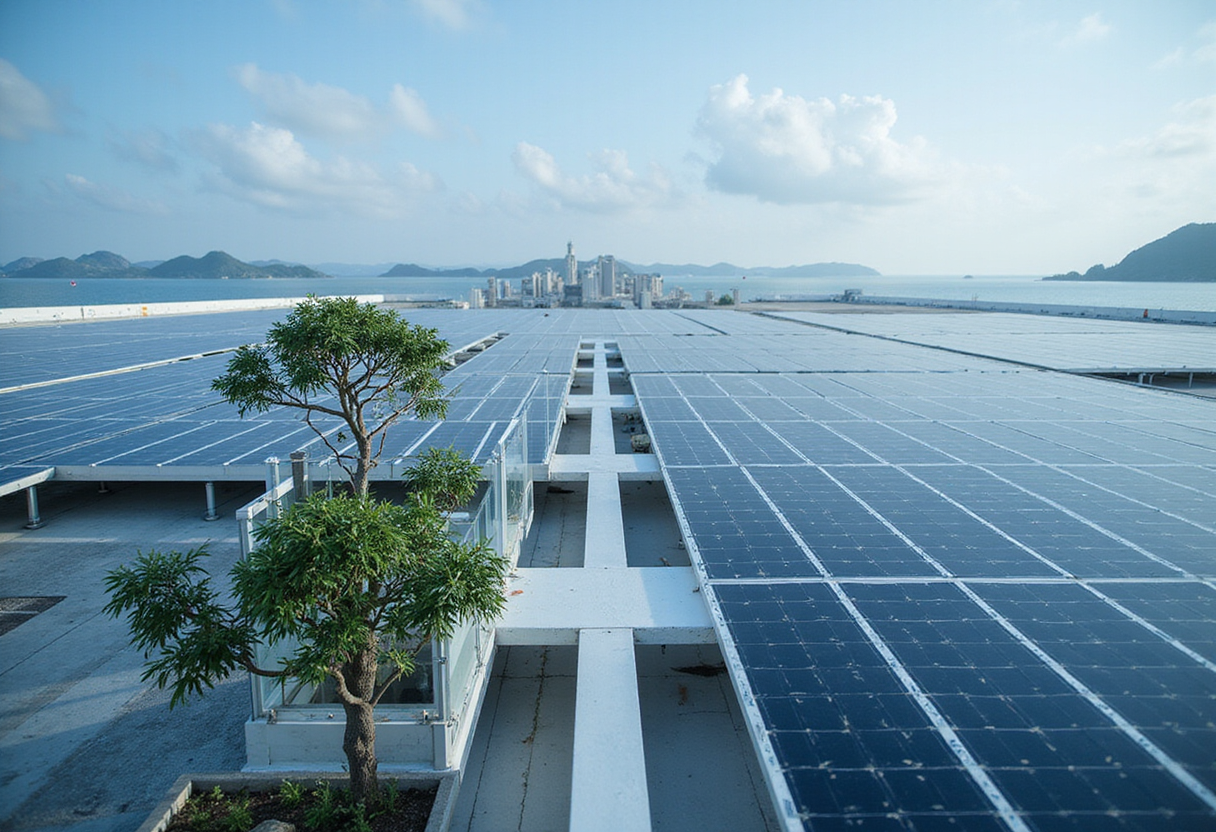
The World Economic Forum has published an analysis of how sustainable aviation fuel (SAF, jet fuel produced from non-petroleum feedstocks such as waste oils and agricultural residues) can be financed at commercial scale, using case studies to draw implications for investors.
The report addresses the central constraint in decarbonising air transport: fuel supply, not aircraft technology. Airlines can operate on blended SAF today, but production capacity remains a fraction of global jet fuel demand, and the financing gap between announced projects and final investment decisions remains wide.
What does the report change for investors?
The World Economic Forum frames the case studies as a screening tool. Each example shows how project developers, lenders and offtakers — the airlines or fuel buyers that commit to purchase volumes in advance — have structured deals that reduce risk for capital providers.
The analysis sets out the implications for investment rather than prescribing policy. It treats bankability, the assessment lenders make before committing debt, as the decisive variable in whether proposed SAF plants reach construction.
Why financing dominates the SAF agenda
Aircraft manufacturers and airlines have committed to net-zero targets that depend heavily on SAF, since battery and hydrogen propulsion remain decades from mainstream short-haul service. That dependency transfers investment risk from operators to fuel producers and their financiers.
The case-study approach reflects this shift. Instead of aggregate demand forecasts, the World Economic Forum examines individual transactions to identify which structures — offtake agreements, equity participation, blended public-private funding — closed funding successfully.
The practical questions ahead
For lessors, airlines and MRO (maintenance, repair and overhaul) providers, the report's significance lies in cost trajectory. SAF currently trades at a premium to conventional jet fuel, and the pace at which financing flows into production capacity will determine how quickly that premium narrows.
For investors, the analysis signals that SAF is moving from policy discussion to project finance, with the World Economic Forum positioning itself as a convener between developers and capital. The next test will be whether the structures documented in these case studies convert into a pipeline of funded plants large enough to meet airline procurement commitments.
via Google News: Sustainable aviation fuel (Source)
More from Priya Raman
Show full bio
Market editor covering money, funding and market shifts around Commercial aviation industry coverage at Flightdeck Report.
478 articles
Same bay
- FDR395Can Sustainable Aviation Fuel Get Off the Ground? Lawyers Weigh In · September 28, 2026
- FDR704Oil Crisis Could Hand Struggling SAF Sector a Lift · October 10, 2026
- FDR541Bain Capital Bets on Rising Sustainable Aviation Fuel Demand · October 10, 2026
- FDR394IATA Sees Corporate SAF Demand Rising Up to Sixfold by 2030 · October 15, 2026
- FDR217Bain Capital Bets on Rising Sustainable Aviation Fuel Demand · October 10, 2026