Clearance CLR-1979 · AIR868
AIRUSW
Airspace & RegulationClearance sheet
US Warns Airlines of Saudi Airspace Risk After Riyadh Attacks
The Trump administration has warned US airlines, including Delta, of security risks in Saudi airspace after deadly attacks on Riyadh's airport, putting Gulf routes under review.
Read-back
- The Trump administration issued a warning to US airlines about security risks in Saudi airspace.
- The warning follows deadly attacks on Riyadh's airport.
- Delta Air Lines is among the US carriers affected by the advisory.
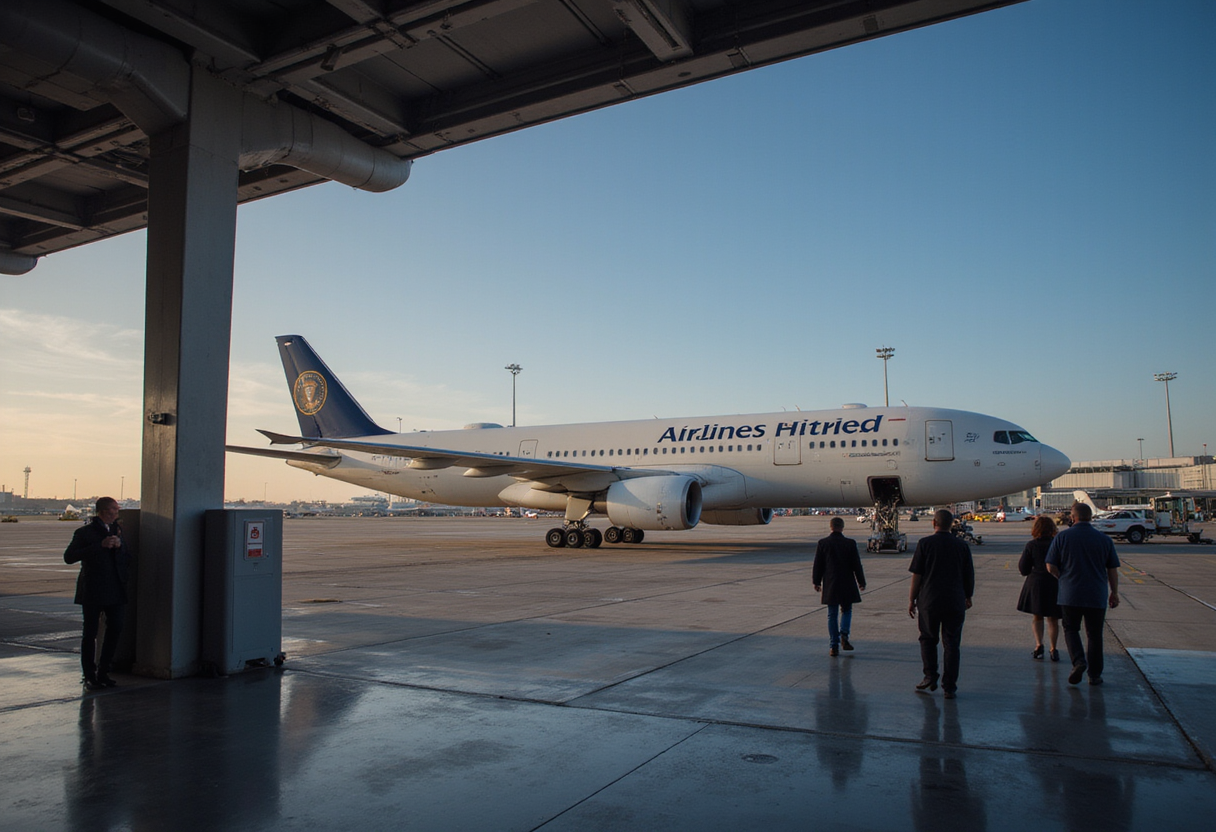
The Trump administration has warned US airlines operating to and through Saudi Arabia about elevated security risks in Saudi airspace, following deadly attacks that struck Riyadh's airport. The advisory puts carriers with service to the Kingdom — among them Delta Air Lines — on notice that routes into the Saudi capital now carry a materially different risk profile.
The warning comes in the wake of attacks on Riyadh's airport that caused fatalities, an escalation that directly affects the small but strategically significant set of US carriers flying to Saudi Arabia or routing traffic through partner networks into the Kingdom. Delta, named in connection with the advisory, is the most prominent US carrier exposed to the disruption.
What does the warning change for US carriers?
For airlines, a government security warning on airspace is not an abstract document. It feeds directly into flight planning, insurance costs and the decision of whether to suspend, reroute or continue service. Carriers must weigh their obligations to passengers and crews against guidance from federal authorities with visibility into threat intelligence.
The specific consequences for Delta and any other affected operators will hinge on several factors:
- Whether the airline continues, suspends or reroutes Saudi-linked services
- How codeshare and alliance partners adjust their own Gulf operations
- Whether insurers reprice coverage for flights transiting the affected airspace
- Whether the Federal Aviation Administration follows with formal airspace restrictions of its own
How did we get here?
The trigger is the attack on Riyadh's airport, which resulted in deaths — an unusually direct strike at a civilian aviation hub in a market that has spent years positioning itself as a global connectivity crossroads. Saudi Arabia has poured investment into aviation as a pillar of its economic diversification program, and incidents at its primary gateway strike at the credibility of that strategy.
For US carriers, the Kingdom has been a limited but growing market. Any sustained deterioration in the security picture would complicate not just point-to-point service but also the partner arrangements through which much US–Saudi traffic flows.
What happens next?
The administration's warning represents a first, formal signal rather than a final determination. Much now depends on whether attacks on Saudi airports recur and how carriers, insurers and the FAA respond in the coming weeks. Airlines with exposure to the region will be reassessing schedules and routing options against the possibility that the advisory hardens into binding restrictions.
via Google News: Air traffic control and airspace (Source)
More from Nathan Brooks
Show full bio
Correspondent covering media and advertising at Flightdeck Report.
375 articles
Same bay
- FDR706US Regulators Warn Airlines Over Saudi Airspace Risk · October 12, 2026
- FDR756Houthi Attack on Riyadh Airport Draws Airspace Warning · October 11, 2026
- FDR307Houthis issue fresh threat to Saudi airspace after airport attack · October 11, 2026
- FDR198Houthis warn airlines against Saudi airports and airspace · October 11, 2026
- FDR176EASA widens Saudi airspace warning after Houthi strike on Riyadh airport · October 9, 2026