Clearance CLR-9676 · SAF887
SAFTHA
Safety & OperationsClearance sheet
Thales Opens Flight Safety Center in Push on Safety Culture
Thales has opened a dedicated Flight Safety Center, aiming to elevate safety culture across its aviation activities and those of airline and industry partners worldwide.
Read-back
- Thales has opened a dedicated Flight Safety Center, the company announced
- The center's stated goal is to elevate safety culture across Thales and its partners
- Aviation International News reported the opening as a culture-focused initiative
- The move aligns with regulator pressure for stronger organizational safety management
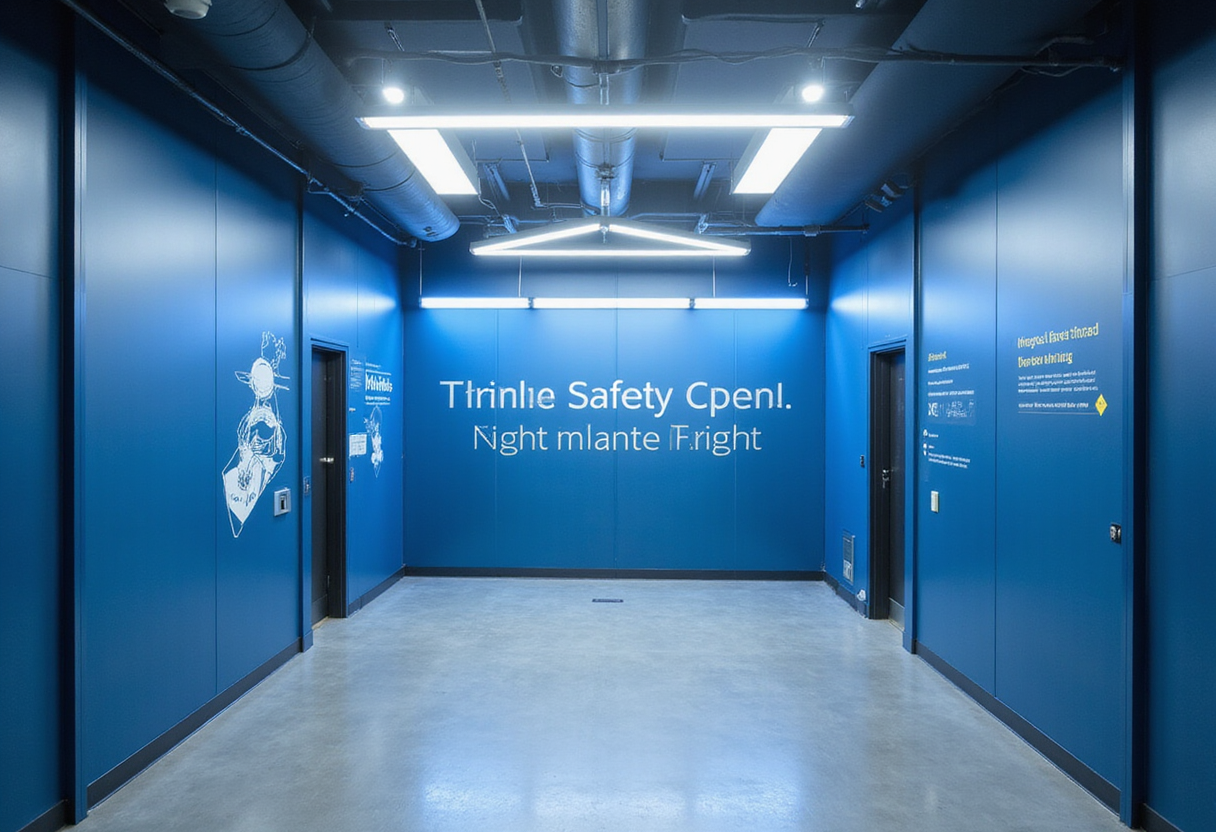
Thales has opened a dedicated Flight Safety Center, the company announced, aiming to elevate safety culture across its aviation activities and those of its airline and industry partners.
The center represents a structural commitment by one of the world's largest avionics and flight equipment suppliers to move safety from a compliance function to an organizational discipline. Aviation International News, which reported the opening, framed the initiative explicitly around culture rather than hardware — a distinction that matters for how suppliers, operators and regulators allocate responsibility for risk.
Why does an avionics supplier need a safety culture center?
Thales occupies a central position in the flight deck ecosystem. Its systems — flight decks, displays, autopilots, surveillance and connectivity equipment — sit aboard thousands of commercial and military aircraft. When a supplier's engineering, testing and support processes degrade, the consequences propagate directly into airline operations through service bulletins, retrofit campaigns and, in the worst cases, airworthiness directives.
A dedicated Flight Safety Center formalizes what has historically been distributed across Thales programs: safety training, human-factors awareness, incident learning and just-culture practices. The company says the goal is to elevate safety culture — language that echoes how regulators now assess organizations, not just products. EASA and FAA oversight regimes increasingly examine whether certificate holders and industry partners demonstrate a functioning safety management system, in which reporting is protected and errors are treated as data.
What changes for airlines and training organizations?
For airlines and flight departments that operate Thales-equipped aircraft, the center signals a single institutional counterpart for safety-related engagement — training support, lessons-learned material and shared analysis of in-service events. Suppliers of Thales' scale routinely field in-service data from dozens of operators; consolidating that intake can shorten the path from an anomaly observed at one airline to a fix distributed across the fleet.
The initiative also positions Thales alongside airframe OEMs and large MRO groups, which have long operated their own safety foundations and training arms. Boeing, Airbus and major engine makers each maintain safety-oriented institutions; a top-tier avionics house establishing an equivalent capability narrows a gap in the supply chain's safety architecture.
The context: culture as a regulatory priority
The opening lands as the industry's safety debate has shifted toward organizational factors. Recent high-profile accidents and near-misses have drawn investigators' attention to how information flows — or fails to flow — between cockpit crews, operators, manufacturers and suppliers. Regulators on both sides of the Atlantic have pressed for stronger reporting cultures and deeper supplier involvement in safety data analysis.
A safety culture initiative at a major supplier responds to that pressure directly. It also anticipates tighter expectations as certification programs for new aircraft and systems place greater weight on human-machine integration, an area where Thales' flight deck work is directly exposed.
What to watch
The measure of the Flight Safety Center will be operational, not architectural. Indicators worth tracking include the breadth of airline participation in its programs, the volume of in-service safety data the center processes, and whether its training output becomes embedded in operator curricula and Thales' own engineering practices.
Thales has opened the door; the industry will judge the center by what flows through it — and by whether, at the next in-service event involving its equipment, the answer arrives faster because the structure existed.
via Google News: Aviation safety (Source)
More from Sophie Lindqvist
Show full bio
Senior reporter covering industry trends and analytics at Flightdeck Report.
418 articles
Same bay
- FDR557IATA: People, Technology and Standards Together Drive Safety · October 9, 2026
- FDR765Boeing safety leader takes lessons to United Nations forum · September 26, 2026
- FDR307Aviation leaders gather at 2026 SMS Industry Forum on safety · October 10, 2026
- FDR965Qatar's aviation safety system rests on training and coordination · September 27, 2026
- FDR955IATA Sets Out Next-Phase Aviation Safety Priorities · October 10, 2026