Clearance CLR-5167 · AIR406
AIRSOU
AirportsClearance sheet
Southwest Florida airport breaks ground on $1.1 billion expansion
A $1.1 billion expansion program at the Southwest Florida airport broke ground, Construction Dive reported, formally launching one of the larger single-airport capital projects currently underway in the United States.
Read-back
- $1.1 billion expansion program broke ground at the Southwest Florida airport
- Construction Dive reported the milestone without scope, schedule, or funding detail
- Program ranks among larger single-airport capital projects currently underway in the United States
- Gateway serves the Fort Myers–Cape Coral metropolitan area on Florida's Gulf Coast
- Construction phase now initiated; further detail from airport management expected in subsequent communications
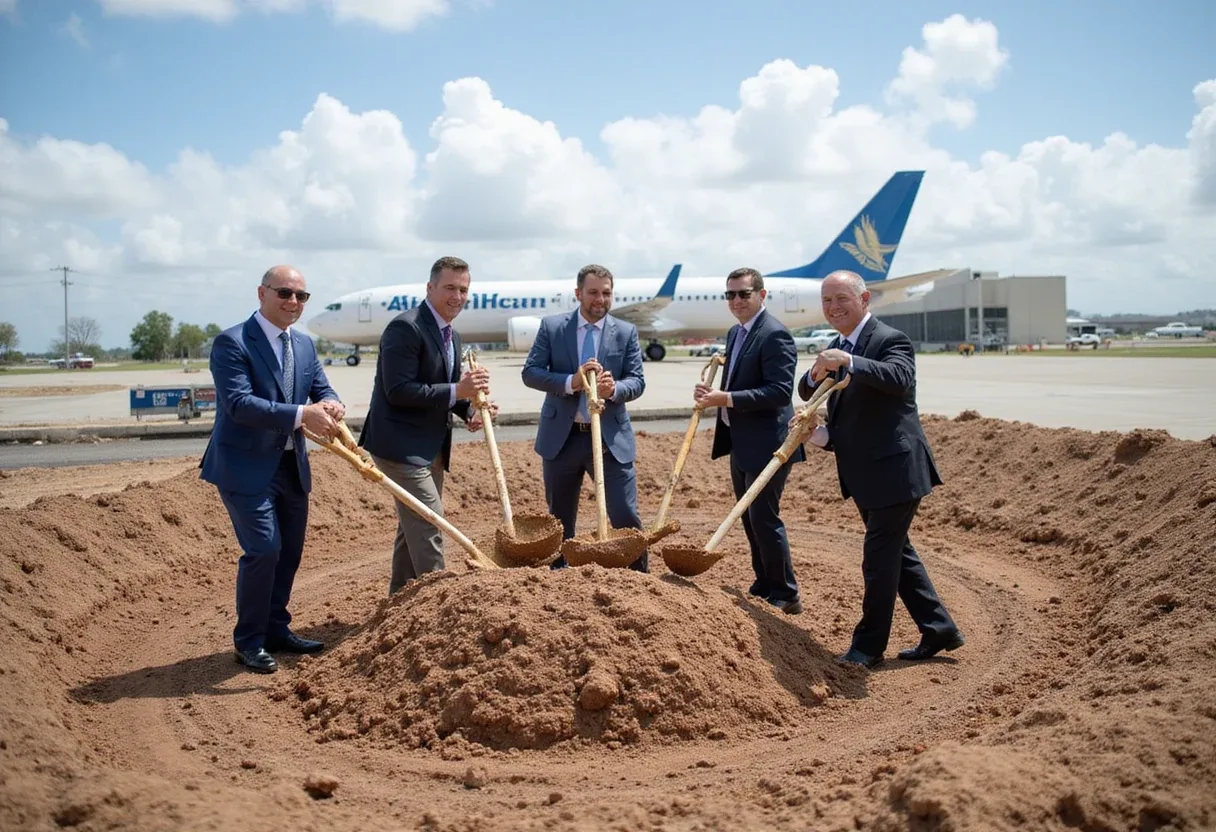
A $1.1 billion expansion program at the Southwest Florida airport broke ground, Construction Dive reported. The program formally launches one of the larger single-airport capital projects currently underway in the United States.
The construction trade outlet syndicated the headline without further detail on the work scope, construction phasing, or capital funding mix. The dollar figure nonetheless places the project in the upper tier of recent US airport capital programs. Operators have moved to address capacity shortfalls (the gap between existing infrastructure and passenger demand) that emerged during the post-pandemic travel recovery.
What does the program cover?
Construction Dive did not detail the work breakdown in its syndicated announcement. Airport capital programs at this dollar level typically bundle terminal expansion, new contact gates (jet bridges connecting aircraft directly to the terminal), and apron reconstruction. Such programs generally also include baggage system upgrades and ground transportation facilities.
Programs of comparable scale have required multi-year construction schedules, with phasing that allows continuous operations throughout the build. The Southwest Florida gateway, which serves the Fort Myers–Cape Coral metropolitan area on the Gulf Coast, has tracked passenger growth above pre-pandemic baselines as leisure travel to the region has accelerated.
How does the price tag compare to other US airport programs?
A single-airport program above $1 billion has become an increasingly familiar category in the Sun Belt, where leisure travel growth and population in-migration have outpaced infrastructure investment. The figure aligns with recent comparable efforts at mid-size hubs serving leisure-driven markets, where operators have turned to large capital outlays to keep pace with sustained demand.
Federal infrastructure funding administered through the FAA (Federal Aviation Administration), supplemented by airport-issued debt and passenger facility charges (fees added to each ticket and dedicated to capital projects), has supported much of the recent ramp in US airport construction.
How does the project fit the regional market?
The Fort Myers–Cape Coral corridor has ranked among the fastest-growing metropolitan areas in the United States over the past decade, with population in-migration and tourism both contributing to air traffic growth. The airport's carrier mix tilts heavily toward leisure and visiting-friends-and-relatives demand, a pattern that produces pronounced peak periods around winter months and spring travel seasons.
That seasonality typically drives terminal capacity requirements beyond what annual enplanement totals alone would suggest, since peak-hour design standards must accommodate the busiest operational periods rather than annual averages.
What does this change for airlines and passengers?
For carriers operating at the airport, an expansion of this scale typically translates into additional gate capacity, larger holdrooms, and improved baggage handling performance. The Southwest Florida market is dominated by Southwest Airlines, with Delta Air Lines, United Airlines, American Airlines, and a roster of low-cost carriers including Breeze Airways, Spirit Airlines, and Frontier Airlines also operating significant service.
A larger terminal footprint typically supports both additional mainline flights and expanded ultra-low-cost operations, which have driven much of the post-pandemic capacity growth at leisure-focused Sun Belt airports. Dispatch reliability (the percentage of scheduled flights that depart within 15 minutes of their scheduled departure time) often stabilizes as gate availability and ground handling bottlenecks are addressed through new infrastructure.
What happens next?
The groundbreaking initiates the construction phase, with subsequent milestones including foundation work, structural steel erection, and fit-out of interior terminal spaces. Industry observers will watch for the next formal communication from airport management detailing the specific work packages, the contracting consortium, and target completion dates for individual elements of the program.
Florida's tourism economy and continued population growth in the Cape Coral–Fort Myers corridor are likely to remain the underlying demand drivers that the new capacity is designed to accommodate, with the project's full benefits materializing only as additional gates and facilities come online over the coming years.
via Google News: Airport expansion (Source)
More from Priya Raman
Show full bio
Market editor covering money, funding and market shifts around Commercial aviation industry coverage at Flightdeck Report.
495 articles
Same bay
- FDR328RSW to Double Terminal Footprint with $1 Billion Concourse E by 2027 · September 30, 2026
- FDR218San Antonio's $2.2 Billion Airport Expansion Reaches Critical Phase · October 14, 2026
- FDR984San Antonio Moves to Finance $2.3 Billion Airport Expansion · September 30, 2026
- FDR625US Airport Expansion Programs Target Capacity Constraints · September 26, 2026
- FDR359St. Augustine Airport Expansion Could Bring New Competition · October 10, 2026