Clearance CLR-5364 · AIR453
AIRSAU
AirportsClearance sheet
Saudi Arabia Extends Riyadh Airport Suspension Amid Houthi Attacks
Saudi Arabia has extended the suspension of Riyadh airport operations after Houthi attacks, with no reopening date announced and airlines left holding schedules.
Read-back
- Saudi Arabia has extended the suspension of Riyadh airport operations
- The extension follows Houthi attacks against the kingdom
- No reopening date has been announced
- Airlines serving Riyadh must continue holding and rerouting flights
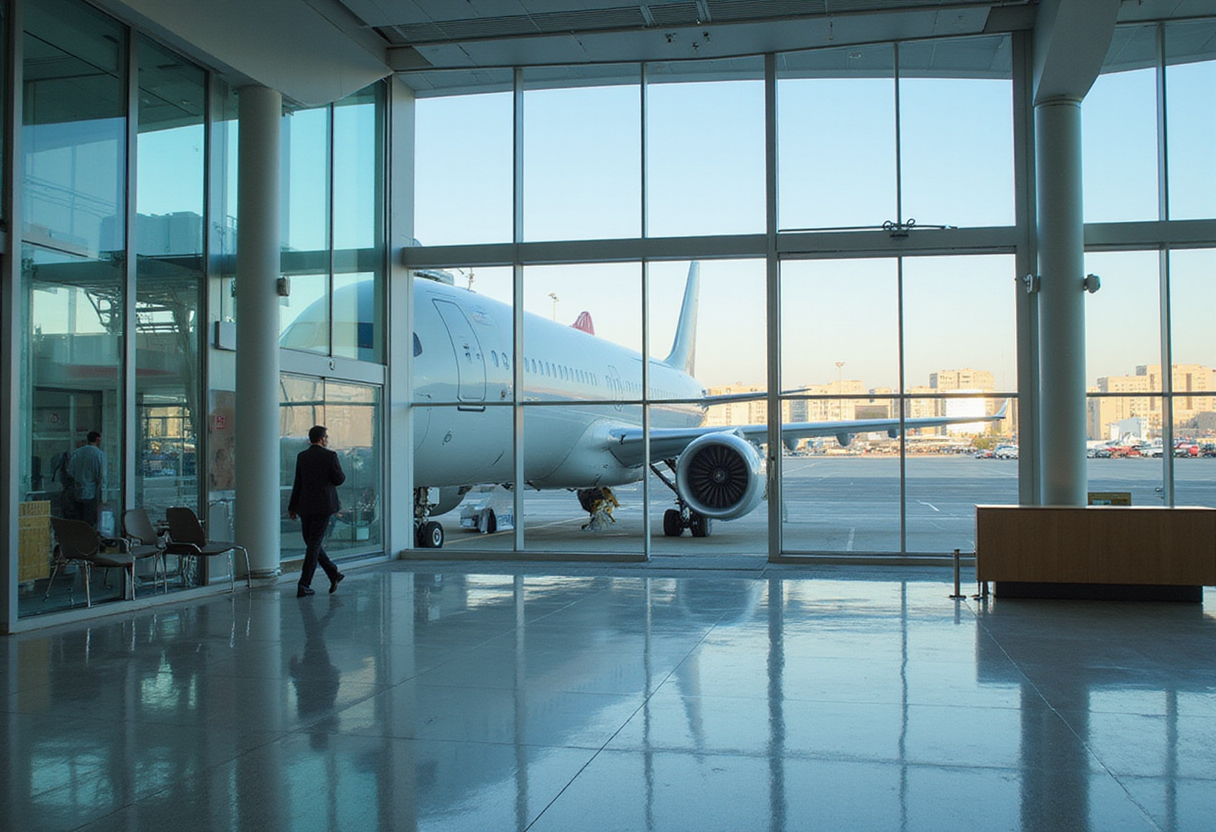
Saudi Arabia has extended the suspension of operations at Riyadh's airport following Houthi attacks, lengthening a disruption that now has no confirmed end date. The decision keeps one of the Gulf's largest aviation hubs closed to normal traffic while the security assessment continues.
The extension confirms that the original closure, imposed after the attacks began, was not treated as a short-term measure. For carriers serving the Saudi capital, that means schedule planning for the coming days remains provisional at best.
What does the extended suspension change?
The practical effect falls on airlines with Riyadh rotations in their networks. Carriers must continue holding flights, rebooking passengers and reworking routings around closed Saudi airspace corridors. The longer the suspension runs, the greater the cumulative cost in lost seat capacity and displaced aircraft.
Riyadh functions as a major connecting point for domestic Saudi traffic and regional international routes. An extended closure pushes that traffic to alternatives, and neighbouring hubs are the natural beneficiaries. Saudia and foreign operators alike lose utilization on parked aircraft, an expense that compounds daily.
No reopening date has been announced. Airlines will plan conservatively until authorities give a firm schedule, and past airspace incidents in the region suggest recoveries take longer than the initial announcements imply.
Who is affected?
The suspension touches several groups at once:
- Airlines operating scheduled passenger and cargo services into and out of Riyadh
- Passengers holding bookings on affected routes, now facing renewed uncertainty
- Freight forwarders relying on belly capacity through the Saudi capital
- Connecting traffic that normally transits the airport's domestic and regional network
How long could this last?
The extension itself signals that the security situation has not stabilized to regulators' satisfaction. Saudi aviation authorities face a familiar trade-off: reopen early and accept risk, or hold closures and absorb commercial damage. The record of the region's conflict-driven closures argues for patience on their side.
Airlines, for their part, will wait. Aircraft can be redeployed; insurance claims and passenger obligations are more difficult to reroute.
The absence of a stated end date is the story. Until Saudi authorities publish a reopening timeline, Riyadh's operations remain suspended, and every extension converts disruption from an incident into a planning assumption.
Whether the suspension lifts within days or settles into a longer closure will depend entirely on the trajectory of the attacks that prompted it.
via Google News: Air traffic control and airspace (Source)
More from Grace Kim
Show full bio
News editor covering companies, deals and strategy in Commercial aviation industry coverage at Flightdeck Report.
398 articles
Same bay
- FDR982Riyadh Airport Closure Extended as US Issues Aviation Safety Warning · October 12, 2026
- FDR385King Khalid International Airport Extends Closure Period · October 12, 2026
- FDR869Riyadh Airport Extends Closure as Gulf Carriers Cancel Flights · October 12, 2026
- FDR209Riyadh Extends Airport Closure, Airlines Cancel Gulf Routes · October 13, 2026
- FDR403Riyadh's airport stays shut this week as carriers cancel services · October 12, 2026