Clearance CLR-1955 · AIR734
AIRKOR
Airlines & NetworksClearance sheet
Korean Budget Carriers Pivot to Cargo as Chip Boom Reshapes Demand
Korean low-cost carriers are redirecting capacity to cargo as passenger demand weakens and fuel costs climb, with the semiconductor boom driving freight demand from Korean gateways.
Read-back
- Korean budget carriers are shifting capacity toward cargo operations, KED Global reports
- The pivot responds to pressure on both passenger demand and fuel costs
- Korea's semiconductor boom is driving growth in high-value, time-sensitive freight demand
- Cargo has traditionally been dominated by Korean full-service carriers, not LCCs
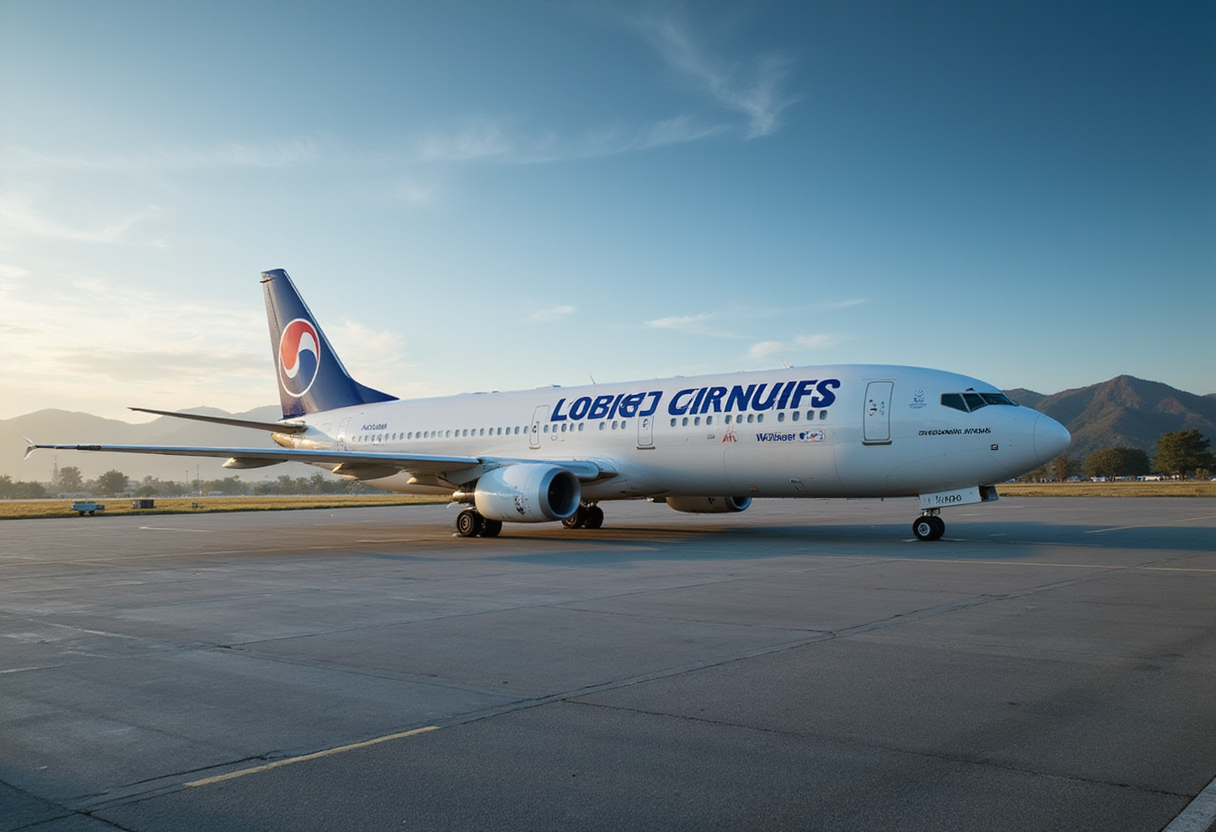
Korean low-cost carriers are redirecting capacity toward cargo operations, seeking relief from simultaneous pressure on passenger demand and fuel costs, according to a report by Korea Economic Daily's KED Global.
The shift places Korea's budget operators in an unfamiliar business: freight has traditionally been the domain of full-service carriers and dedicated cargo airlines, while LCCs built their economics on high-density passenger flying on short- and medium-haul routes. The reported pivot signals that the passenger-only model is no longer sufficient to absorb fuel-price volatility on the routes these airlines serve.
Why are budget airlines turning to freight now?
Two pressures converge in the KED Global account. Passenger-side economics have weakened, and fuel costs remain a persistent drag on narrowbody operations with thin margins. Cargo revenue — historically a secondary line for LCCs — offers a hedge that does not require new aircraft, only different use of existing belly capacity and, in some cases, cabin or main-deck conversion of passenger airframes.
The timing is not accidental. Korea's semiconductor industry is booming, and chip-related shipments — high-value, time-sensitive freight — are expanding the addressable cargo market out of Korean gateways. For carriers sitting on idle or underutilized capacity, electronics freight is one of the few revenue pools growing fast enough to matter.
What does this mean for the Korean market?
The move has competitive implications in both directions.
- Against full-service rivals: Korean Air and Asiana-derived networks have long dominated Korean air cargo. Any LCC entry into freight erodes a revenue stream that helped legacy carriers through past passenger downturns.
- Against freighter operators: dedicated cargo capacity is finite, and belly capacity from passenger airlines is the swing supply in the airfreight market. More LCC bellies chasing chip-related shipments could soften yields.
- For the LCCs themselves: cargo income can smooth cash flow across seasons when leisure demand dips, but it requires ground handling, palletization capability and freighter relationships that budget carriers have rarely built.
KED Global frames the pivot as a response to structural conditions rather than a temporary tactic: the chip boom is producing sustained freight demand at the same time the passenger side of the Korean LCC market is oversupplied and fuel-exposed.
Is cargo a durable fix or a stopgap?
The honest answer depends on variables the report does not resolve. Cargo yields are cyclical, and electronics demand tracks the semiconductor cycle, which has its own downturns. Fuel prices that hurt passenger economics also raise freighter operating costs. An LCC that adds cargo capability buys diversification, not immunity.
What the shift does demonstrate is that Korean budget carriers are being forced out of the pure-passenger playbook. When operators built around low unit costs on leisure routes start competing for semiconductor shipments, the market has told them where the money is.
Expect further announcements of cargo-capable configurations, expanded freight partnerships or converted aircraft from Korean LCCs if chip-related airfreight demand holds — and a retreat to passenger-only flying if it does not.
via Google News: Air cargo (Source)
More from Nathan Brooks
Show full bio
Correspondent covering media and advertising at Flightdeck Report.
376 articles
Same bay
- FDR988LS Securities Raises Korean Air Target After Q3 Cargo-Driven Beat · October 2, 2026
- FDR609Samsung SDS acquires Woojung Air to expand air freight reach · October 12, 2026
- FDR869Transpacific air cargo demand outpaces available lift · October 9, 2026
- FDR534Air Cargo Demand Up 4.4% as Trade Growth Underpins Peak Season · October 9, 2026
- FDR438Samsung SDS Acquires Woojung Air to Build Global Air Freight Arm · October 12, 2026