Clearance CLR-1649 · AIR550
AIRHOU
Airspace & RegulationClearance sheet
Houthi Attacks Are Redrawing Civil Aviation Routes
An explainer from Irish Sun examines how Houthi attacks are disrupting civil aviation, forcing carriers to reassess routes near Yemeni airspace.
Read-back
- Irish Sun published an explainer titled "How are Houthi attacks disrupting civil aviation?"
- The article frames Houthi attacks as a civil-aviation disruption issue, not solely a shipping one
- The headline alone names no carriers, dates, closure orders or cost figures
- Affected airspace sits near Yemen, adjacent to major Europe–Gulf–Asia corridors
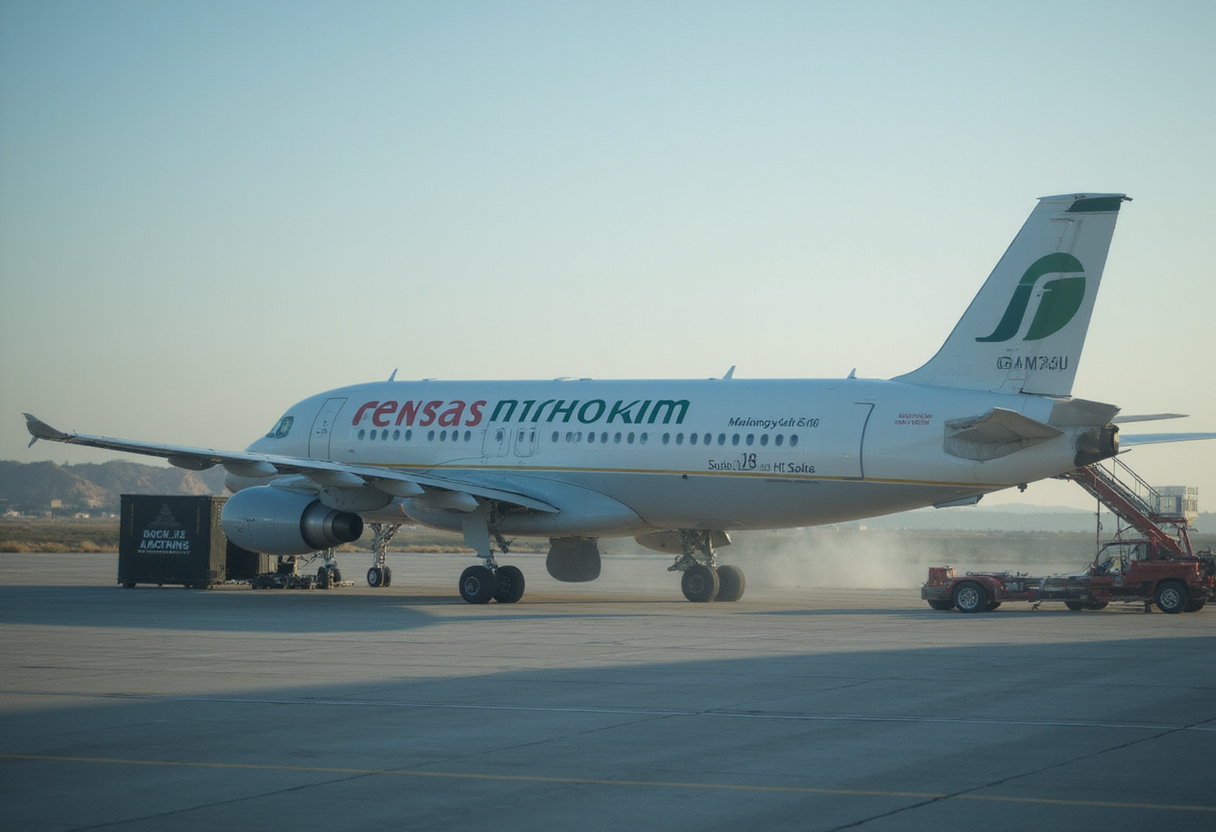
Attacks linked to Yemen's Houthi movement are disrupting civil aviation, and an explainer published by Irish Sun sets out how the conflict is forcing carriers to change how they fly.
The piece addresses a question that has grown more urgent for airlines, lessors and regulators alike: what does this change for commercial operations?
What is the source reporting?
The explainer, carried by Irish Sun under the headline "How are Houthi attacks disrupting civil aviation?", examines the operational consequences of missile and drone activity attributed to the Houthi movement. The article frames the disruption as a civil-aviation issue, not merely a shipping one.
The source headline confirms the scope. It does not, by itself, name the carriers affected, the routes closed, or the duration of the diversions. Those specifics sit in the full article text.
Why does this matter to operators?
Conflict near the Red Sea and the Arabian Peninsula sits astride some of the world's busiest long-haul corridors. Carriers flying between Europe, the Gulf, East Africa and South Asia routinely cross airspace adjacent to Yemen.
When states restrict that airspace, airlines must detour. Detours burn fuel, add flight time and can force payload reductions on marginal sectors. Network planners then re-time banks and, in some cases, suspend routes outright.
What does this change for the passenger? Longer block times and, on some city pairs, suspended service.
What the source does not say
Readers should note the limits of the headline itself. It promises an explainer, not a incident report. It does not cite:
- a specific attack on a civil aircraft;
- a named airline or regulator;
- a closure order with dates;
- a cost or delay figure.
Any of those would be needed before quantifying the disruption. Until the full text is checked against NOTAMs and regulator statements, the scale remains an open question.
The verification gap
Manufacturer and airline claims about rerouting costs tend to arrive late and rounded. Dispatch-reliability figures and block-time statistics are the harder test. If Houthi activity is reshaping schedules, the evidence will appear in monthly operational reports, not in press releases.
The underlying risk is not new. Civil aviation has a long record of airspace avoidance around active conflict zones, from eastern Ukraine to the Sinai. Each episode reset risk assessments and routing assumptions within days.
What comes next
The explainer signals continued attention to how non-state actors affect civil airspace. Watch regulator NOTAMs and the airspace closure notices that follow any escalation. The story is grounded in the source; the numbers, when carriers publish them, will tell the rest.
By James Calloway
via Google News: Aviation safety (Source)
More from James Calloway
Show full bio
Staff writer covering people, launches and day-to-day practice in Commercial aviation industry coverage at Flightdeck Report.
453 articles
Same bay
- FDR953Houthis Warn Airlines Off Saudi Airports, Threaten Full-Scale Strikes · October 11, 2026
- FDR244Houthis Threaten Saudi Airspace After Deadly Airport Attack · October 11, 2026
- FDR969Houthis claim new strikes on Saudi airports, declare airspace unsafe · October 11, 2026
- FDR471Houthis Issue New Threat to Saudi Airspace After Deadly Airport Attack · October 12, 2026
- FDR538Reported Iranian-Modified Missiles Raise New Questions Over Yemen · September 30, 2026