Clearance CLR-8761 · AIR406
AIRAIR
Airspace & RegulationClearance sheet
Airspace Is Filling Up. eVTOL Operators Have a Textbook to Read
As low-altitude airspace fills with eVTOLs, the collision-avoidance record in conventional aviation offers tested, certified lessons the sector has mostly treated as optional reading.
Read-back
- Aerospace Global News examines what eVTOL operators can learn from existing collision-avoidance systems
- The analysis is prompted by increasingly congested lower-altitude airspace
- Collision-avoidance systems in conventional aviation are certified and flying; eVTOL equivalents are not
- The core question is whether detection and resolution sit on the airframe or on the ground
- No numbers, dates or executive quotations were provided in the source item
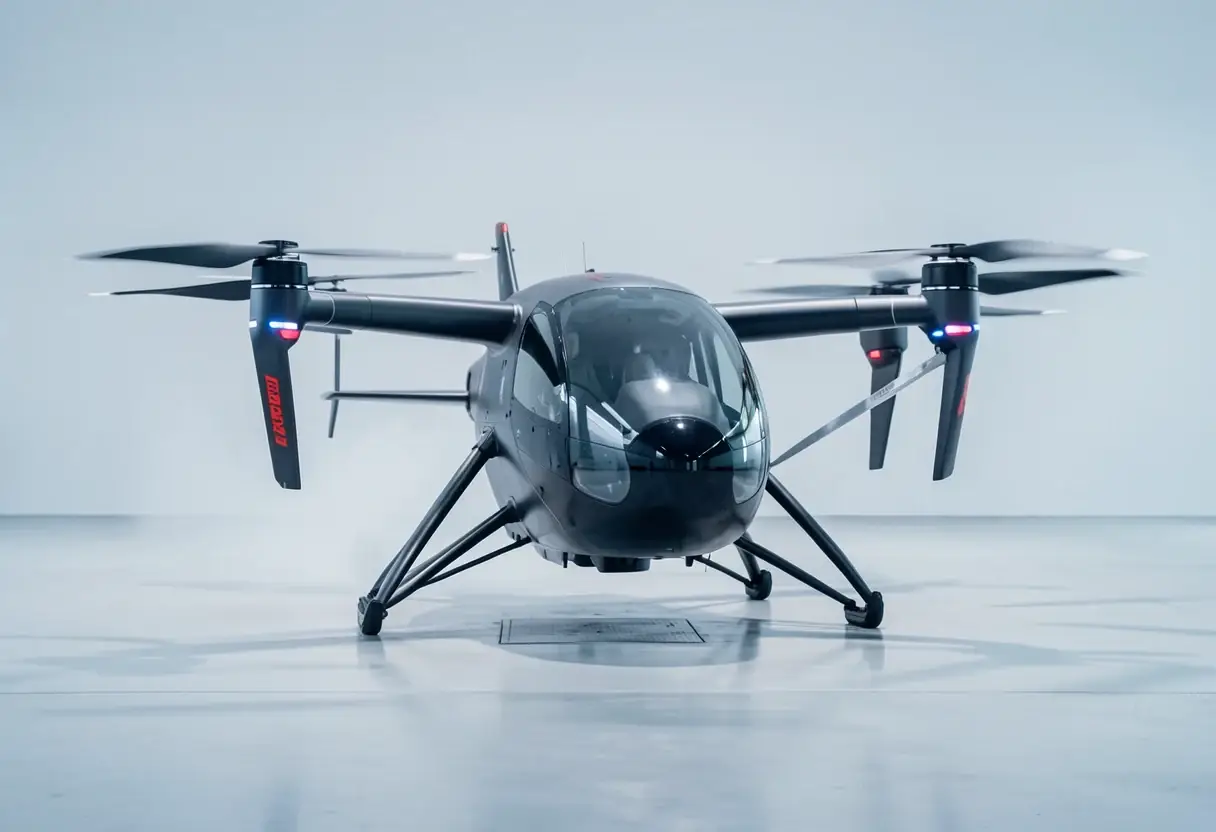
Aerospace Global News has posed the question the advanced air mobility sector has so far answered mostly with brochures: what can eVTOL operators learn from decades of collision-avoidance work as lower-altitude airspace grows busier? The honest answer is that the lessons are cheap, tested and, in several cases, already certified. The sector's habit is to treat them as optional reading. That habit will not survive contact with a regulator.
What does the existing collision-avoidance record actually offer?
The core insight is structural rather than technical. Collision-avoidance systems in conventional aviation — the airborne warning architecture that commercial crews have flown with for decades — were not designed as standalone safety nets. They work because they sit inside an established system: trained crews, standardized procedures, certified avionics and a regulator with enforcement powers. An alert, on its own, is a sound in a cockpit.
eVTOL operations intend to run at altitudes and frequencies that conventional aviation has never combined — many small aircraft, flying often, over cities, in airspace shared with helicopters and drones. The collision-avoidance heritage tells operators what breaks first in that environment. It is rarely the hardware. It is the procedural layer: who has priority, who diverts, and what happens when two aircraft receive conflicting resolutions at once.
Where does the burden fall — on board or on the ground?
The question Aerospace Global News frames is, at heart, an architecture question. Conventional collision avoidance puts detection and resolution on the airframe, with the crew as the final decision-maker. Many eVTOL business cases assume high automation or remote supervision, which moves that decision off the aircraft and into data links, ground stations and software nobody has yet certified at scale.
Each relocation of the decision carries a cost consequence. Onboard autonomy raises per-vehicle equipment weight and price. Ground-managed deconfliction raises infrastructure cost and concentrates liability with the operator. Neither option is free, and the collision-avoidance record suggests the bill arrives late, after the architecture is locked.
What should operators do before the airspace fills?
The practical takeaways from the piece are the unglamorous ones:
- Treat collision avoidance as a system property, not a bolt-on product.
- Design procedures for the failure cases first, not the demonstration cases.
- Assume airspace density will exceed projections, because in aviation it usually does.
- Reconcile automation boundaries with regulator expectations before certification, not during it.
None of this requires new physics. It requires reading.
The verdict
The sector's enthusiasm for novel airframes has consistently outrun its attention to airspace mechanics. That imbalance is correctable, and the correction costs far less than a retrofit. The operators who internalize the collision-avoidance record now will file certification arguments their competitors must draft later, under deadline. Busy airspace is not a hypothetical; it is a schedule.
By Grace Kim
via Google News: Air traffic control and airspace (Source)
More from Grace Kim
Show full bio
News editor covering companies, deals and strategy in Commercial aviation industry coverage at Flightdeck Report.
476 articles
Same bay
- FDR649House Passes Alert Act Mandating ADS-B In After DCA Midair Collision · September 30, 2026
- FDR593Aviation Week: Effective SMS Programs Begin With Data Gathering · October 9, 2026
- FDR316Post-Wichita–DC Crash Safety Reforms Stall in Washington · September 30, 2026
- FDR858EASA counts 116 aviation fatalities in 2025 annual safety review · September 30, 2026
- FDR334House Passes Alert Act 396-10, Sending Aviation Safety Bill to Senate · September 30, 2026