Clearance CLR-2725 · MRO942
MROAIR
MRO & AftermarketClearance sheet
Aircraft MRO Market on Track for 9.8% Annual Growth to 2030
The aircraft MRO market will expand at a 9.8% compound annual growth rate through 2030, more than doubling in value and tightening global shop capacity, a new forecast says.
Read-back
- Global aircraft MRO market forecast to grow at 9.8% CAGR through 2030
- At that rate, market value would more than double within roughly seven years
- Growth pressures hangar capacity, technician hiring and shop turn times
- Forecast reported by EIN News based on a new market assessment
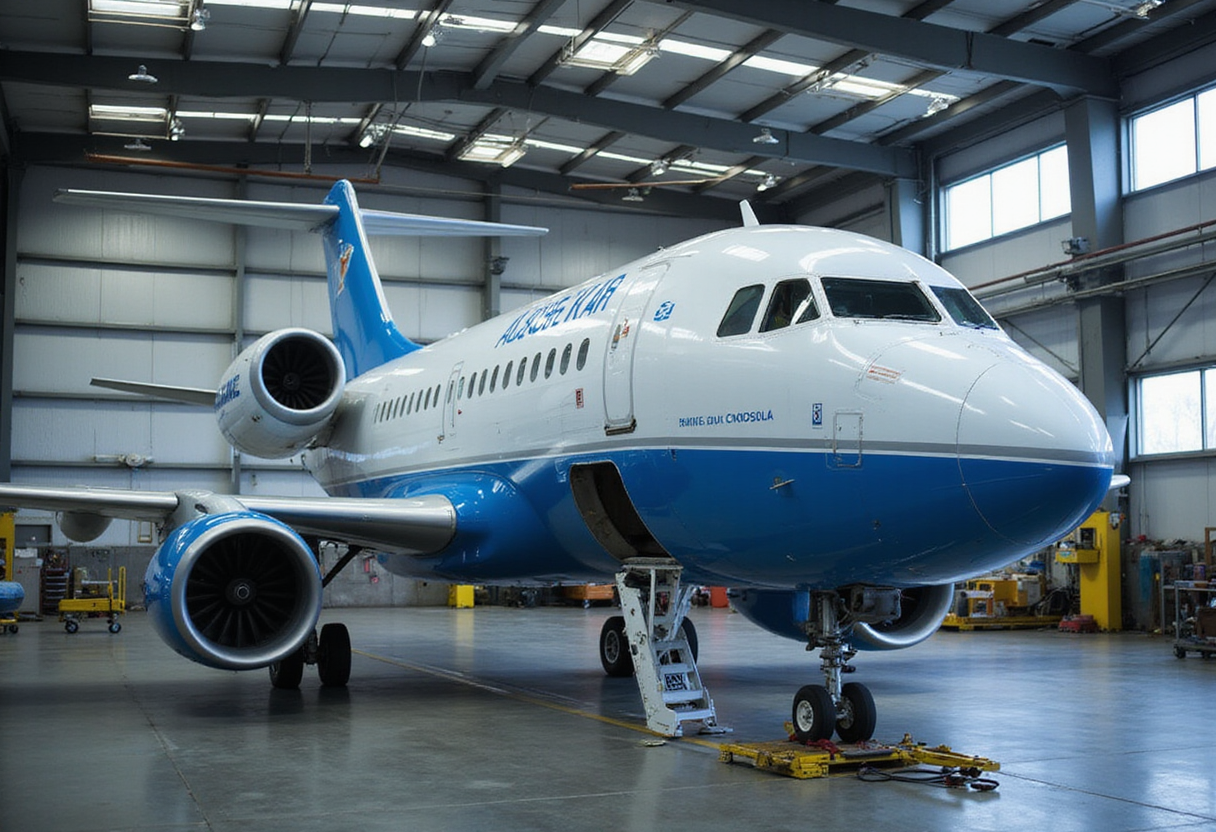
The global aircraft maintenance, repair and overhaul (MRO) market will grow at a compound annual growth rate of 9.8% through 2030, according to a new market assessment reported by EIN News. That figure, if realized, would rank MRO among the fastest-expanding segments of the commercial aviation supply chain over the current decade.
The forecast frames steady rather than volatile expansion. A 9.8% CAGR implies the market's value would slightly more than double over a seven-to-eight-year horizon, a pace that carries direct consequences for shop capacity, technician hiring and turn-time economics across the airline and lessor ecosystem.
Who depends on this growth?
Airlines, independent MRO providers, OEM service divisions and lessors all compete for the same heavy-check and component capacity. Near-double-digit demand growth means shop slots tighten, lead times lengthen and pricing leverage shifts toward providers with existing hangar footprint and certified workforce.
For carriers, that translates into schedule risk: aircraft awaiting maintenance cannot fly revenue sectors. For lessors, maintenance-reserve economics and lease-return conditions become harder to manage as shop availability tightens.
What drives a 9.8% trajectory?
Growth at this rate typically rests on three structural pillars:
- An expanding global fleet requiring scheduled checks and unscheduled repairs
- Aging aircraft retained longer as new-build deliveries stretch delivery backlogs
- Rising utilization driving more frequent engine and component shop visits
The forecast's steadiness suggests analysts see these drivers as durable rather than cyclical, even as new-generation airframes shift some maintenance content from airframe checks toward engine and component work.
What should buyers and investors verify?
A 9.8% CAGR is a projection, not a delivery record. The figure deserves scrutiny against verifiable indicators:
- Actual shop-visit volumes and heavy-check completions reported by major MRO networks
- Technician hiring and training pipelines, the most common capacity bottleneck
- Backlog and turnaround-time disclosures from the largest providers
If capacity grows more slowly than the forecast implies, the practical outcome is inflationary: maintenance cost per flight hour rises, and airlines with older fleets carry the heaviest exposure.
The certification and workforce constraint
Maintenance capacity is certificated capacity. Regulatory approvals for repair stations, Part-145 certificates in different jurisdictions, and OEM-authorized service center designations all gate how quickly supply can respond to demand. A near-10% growth rate therefore tests whether regulators and training organizations can expand the qualified workforce and approved-station base fast enough to keep pace.
Failure on that front would not invalidate the demand forecast — it would instead convert unmet demand into longer ground times and higher prices, a cost pressure airlines would carry into network planning and fleet-decision modeling.
Outlook
The 9.8% CAGR to 2030 positions MRO as a growth market on paper; the sector's actual trajectory will be set by hangar capacity, certified labor and component supply chains over the next several years.
via Google News: Aviation MRO (Source)
More from Grace Kim
Show full bio
News editor covering consumer brands and retail at Flightdeck Report.
379 articles
Same bay
- FDR352AAR to Acquire Majority Stake in MRO Holdings for $1.8 Billion · September 28, 2026
- FDR483AAR to Acquire Majority Stake in MRO Holdings for $1.8 Billion · September 28, 2026
- FDR415CMA CGM Air Cargo in Talks to Acquire MRO Provider Crystal · September 27, 2026
- FDR163AAR to Pay $1.8 Billion for Stake in Aircraft-Maintenance Company · September 28, 2026
- FDR111Commercial Aircraft Order Backlog Passes 17,000 for First Time · October 9, 2026