Clearance CLR-3601 · SAF958
SAFABU
Safety & OperationsClearance sheet
Abuja Door Incident and Ondo Crash Put Nigerian Aviation Oversight Back on Trial
An aircraft door event at Abuja and a crash in Ondo have put Nigerian aviation oversight back under examination, LEADERSHIP Newspapers reports.
Read-back
- Aircraft door incident occurred at Abuja, LEADERSHIP Newspapers reports
- Separate crash occurred in Ondo state in the same period
- Both events raise questions over Nigerian aviation safety oversight
- No findings from the Nigerian Safety Investigation Bureau were available at report time
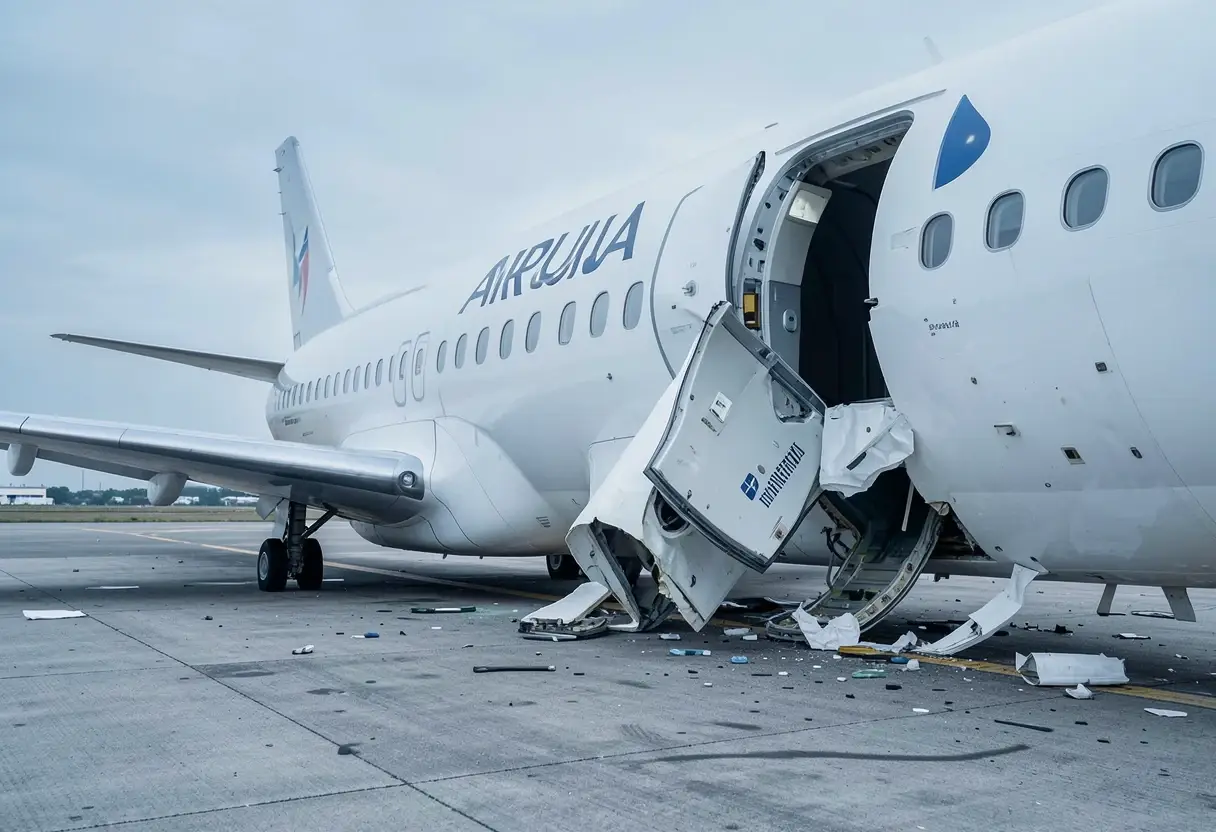
Two Nigerian aviation incidents — an aircraft door event at Abuja and a crash in Ondo — have renewed scrutiny of the country's safety oversight, LEADERSHIP Newspapers reports. The pairing matters. One event on the ground, one in flight, both landing on the same regulator's desk within the same news cycle.
Details in the public record remain thin, and this publication will treat them as such. What the report establishes is the question, not yet the answer: whether Nigeria's oversight system caught what it should have caught, and when.
What do the two events have in common?
The Abuja incident concerns an aircraft door. Door events divide cleanly into two categories — improper closure or latching on the ground, or structural and mechanical failure in service. The distinction determines everything that follows: the maintenance response, the airworthiness directive question, and whether any crew or ground-handling procedure needs revision.
The Ondo crash is the graver of the two by definition. A crash triggers a mandatory investigation under Nigerian law and ICAO Annex 13, with the Nigerian Safety Investigation Bureau responsible for the probe and the Nigeria Civil Aviation Authority responsible for any enforcement that follows.
Neither agency's findings were available at the time of the report. That is normal. Annex 13 investigations run on months, not news cycles.
Why does this keep coming up?
The report frames both events as raising "fresh questions" — a phrase that implies the questions are not new. Nigerian aviation has a documented history of incident clusters followed by regulatory soul-searching, and the sector's safety record has long been the binding constraint on its growth ambitions.
The stakes are commercial as much as regulatory. Nigeria is West Africa's largest air travel market, and its carriers' access to insurance, leasing and international codeshare agreements depends on maintaining credible oversight. A regulator under question is a cost problem for every operator it certifies.
What happens next?
The sequence is predictable. Investigators will recover what they can from Ondo, the NSIB will issue a preliminary report, and the NCAA will face pressure to show whether the Abuja door event reflects an isolated lapse or a pattern. Until those documents exist, the honest verdict is that Nigeria has two incidents and one open question about whether its safety net is as tight as its market requires.
By Grace Kim
via Google News: Aviation safety (Source)
More from Grace Kim
Show full bio
News editor covering companies, deals and strategy in Commercial aviation industry coverage at Flightdeck Report.
482 articles
Same bay
- FDR512Igbokoda Crash Prompts Keyamo–Air Force Talks on Civil-Military Safety Gap · October 10, 2026
- FDR918Nigeria moves to close civil-military aviation safety gap after Igbokoda tragedy · October 9, 2026
- FDR105Keyamo, Aneke launch civil-military aviation safety push after Ondo crash · October 10, 2026
- FDR887Ondo Crash Pushes Nigeria Toward Civil-Military Aviation Coordination · October 10, 2026
- FDR874Keyamo, Nigerian Air Force widen civil-military ties after Ondo crash · October 10, 2026